
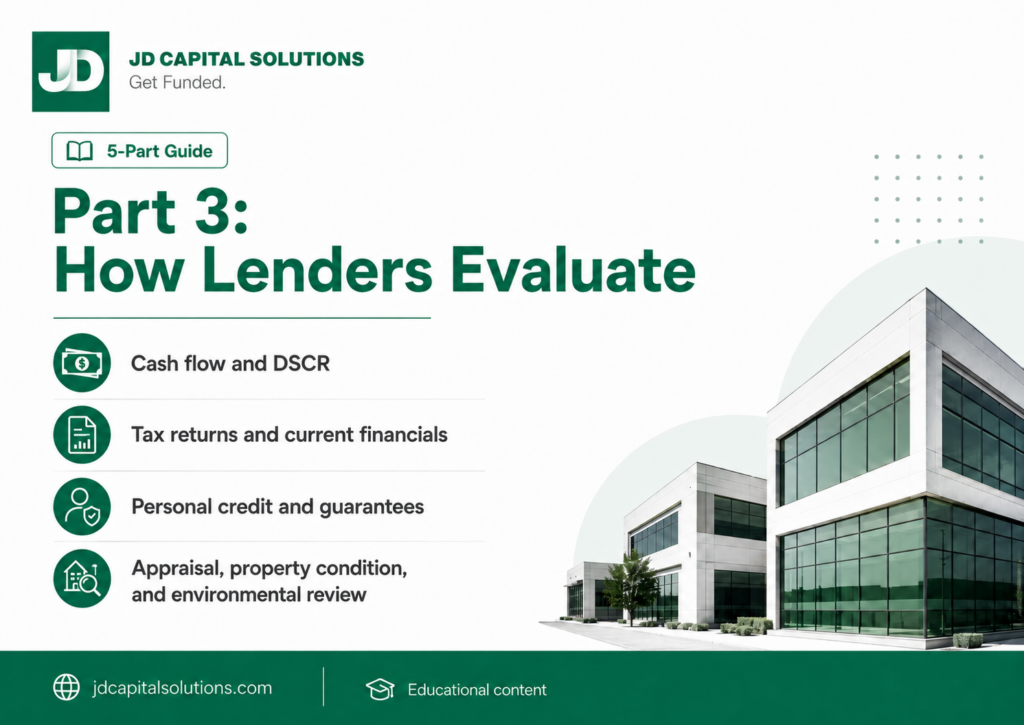
When financing owner-occupied commercial property, lenders evaluate both the real estate and the operating business.
Business cash flow
The business must demonstrate that it can afford the proposed loan payments while continuing to cover operating expenses.
Lenders frequently review the debt service coverage ratio, which compares available cash flow with required debt payments.
Historical financial performance
The lender may request:
- Business tax returns
- Profit and loss statements
- Balance sheets
- Business debt schedules
- Bank statements
- Accounts receivable and payable reports
Financial statements should be current, accurate, and consistent with the tax returns.
Personal financial strength
Owners may also need to provide:
- Personal tax returns
- Personal financial statements
- Credit authorization
- Information about personal debts and outside income
Property value and condition
An appraisal is generally required. Depending on the property, lenders may also require environmental reports, inspections, zoning documentation, title work, or construction estimates.
A strong property does not automatically compensate for weak business cash flow. The operating business must still demonstrate the ability to repay the loan.
Next: How much down payment a borrower may need.
This series is provided for general educational purposes and does not constitute a loan commitment, legal advice, tax advice, or a guarantee of approval.
